

LMOW #1 : DIYNOT? Tapping Trees
Welp! I am just taking a stab at something I have been procrastinating on for a long time, kicking off this substack where I indulge in conversations around materials, processes and projects!

A day of firsts!
DIYNOT? Ep. # 1 : MAPLE TREE TAPPING!
Last week I geeked out and made something I have been wanting to make for a long time, Ep.1 of a lil’ casual video series I am calling DIYNOT? :) I see DIYNOT? as an invitation to myself and others to * touch grass * amidst the chaos in the world, not an excuse to look away but an IRL breather engaging your resourceful side. I see “DIY-ness”, resourcefulness and a practice of casually fixing things as important anchors in the human experience to keep out of corporate “ consumer culture “ and within our instincts as individually capable people :) I expect this will come up again in some future substack/newsletters, but I want share from the get go, this won’t be all DIY how-to’s in this newsletter, it’ll be a range of sharing my explorations in process, materials, design & people I want to highlight :)
So! DIYNOT? You can find the video at the bottom of this letter :) In this episode we are tapping our maple trees in the woods behind our house, this is our second year doing this and I am amazed at how low lift high return it is. Yes, you need to get together the supplies (will list below and have recommendation links) and yes, you need access to maple trees you are welcome to tap, but once you get those barriers figured out, it’s a fairly quick project. Within seconds of drilling the holes and hammering in the spiles (metal taps) the magical mild sweet sap starts dripping out. That is, if you have the time of year right. It needs be below freezing at night and above freezing during the day, that’s what gets the sap moving up the trunk and out your spile and into your buckets! The Hudson Valley season is almost done but we should get another week or so with this cold snap on it’s way. From there you are in a process of cooking down the sap into syrup, it takes about 40 gallons of sap for one gallon of syrup. We will probably use most of our syrup for our easter brunch French Toast next month, we are not religious in relation to Easter, but I do love an excuse to brunch in the yard with a colorful feral child egg hunt as our entertainment in early Spring :)
SUPPLIES
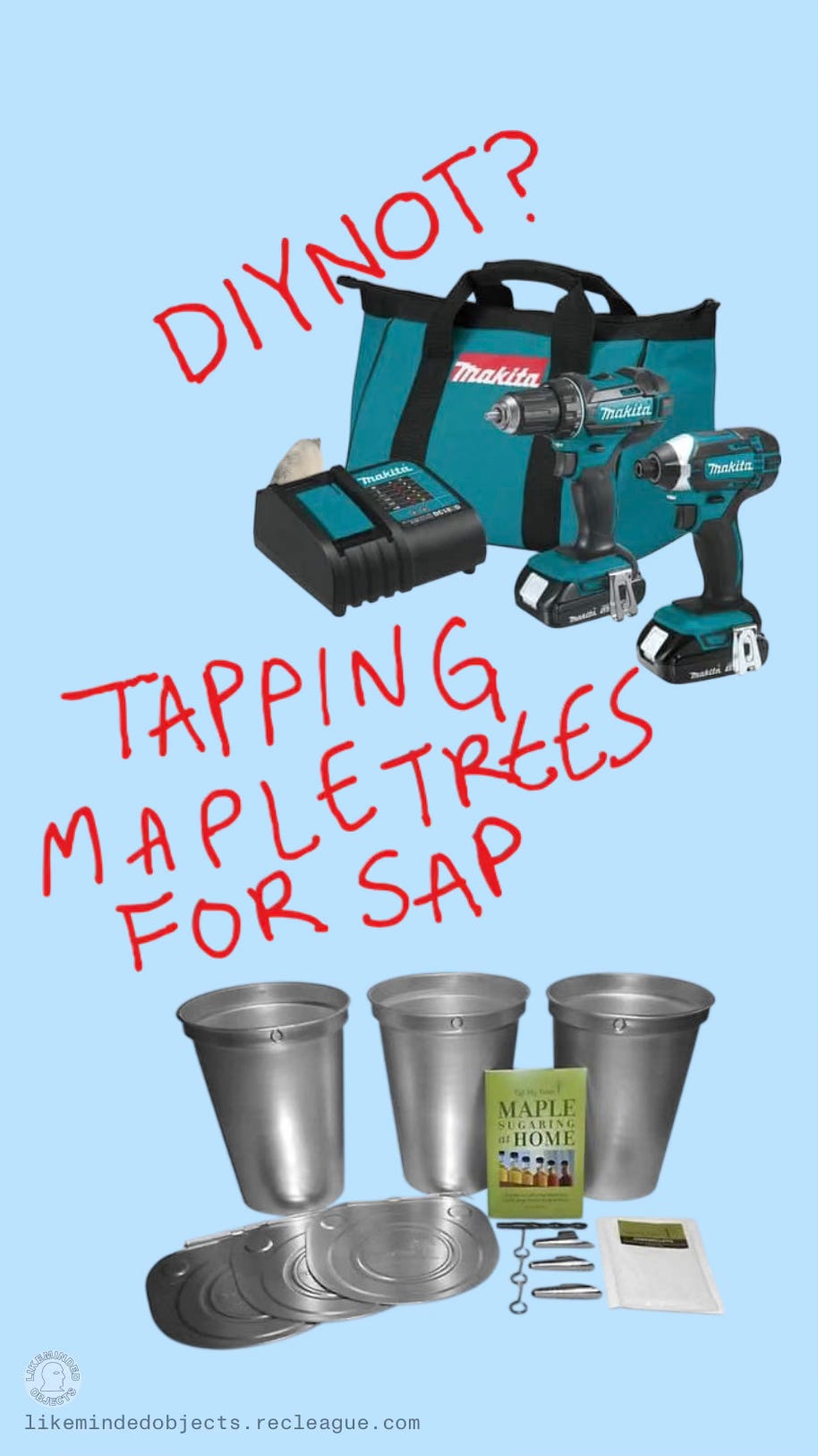
A Drill (if you don’t have one and are in the market to buy, I recommend THIS Makita drill/driver set. I have had mine for almost a decade and still love the size , proportion & design, feels like the right balance between lighter weight / kinda femme and also substantial / strong / dependable.
A Hammer
THIS TREE TAPPING KIT has all the remaining needs which are…
Buckets (if you want to be resourceful, you could drill a hole in something you already have, we did that last year with 1 gallon plastic water jugs, but this year we sprung for the metal buckets with lids like the kit linked above.
Metal Spiles (can be found outside a kit via ebay HERE)
1/2” Drill Bit (can be found outside a kit at any hardware store or HERE)
STEPS
Check the weather, it should be below freezing nights, above freezing days
Get together your supplies, collection linked HERE
Locate your Maple trees (research bark and leaf shape on the internet, its easier to find your trees in the spring-fall when the leaves are still on and Maple leaves are quite obvious, but you can usually find a brown leaf hanging on and once you get the bark visual right a few times (described to me as looking like stretch marks) it will get easier to spot em.
Drill your hole on the South facing side of the tree trunk above a big root.
Hammer in your spiles , hang your buckets / lids & start collecting!
Cooking down takes a long time, when you have a long day at home you can make a fire outside and keep adding wood to it, or tbh last week it was pretty rainy so we have been cooking down on our stove to keep up with sap production. You can also just enjoy sipping the sap as a refreshing drink or use it as a sweetening / steaming addition to cooking, we’ve cooked bacon in the sap before and it does not disappoint.
Feel free to watch this quick quick process summary video below to see us set up a tree, (there’s more to learn on the world wide web but this can get you started) & I hope you enjoy getting back outside after this cold winter!
Thanks for reading, I will be putting out these LikeMindedObjectsWorld Newsletters weekly and look forward to playing with the format of what is being shared, feel welcome to reach out with any thoughts/requests/critiques!
Onward & Upward,
Elise